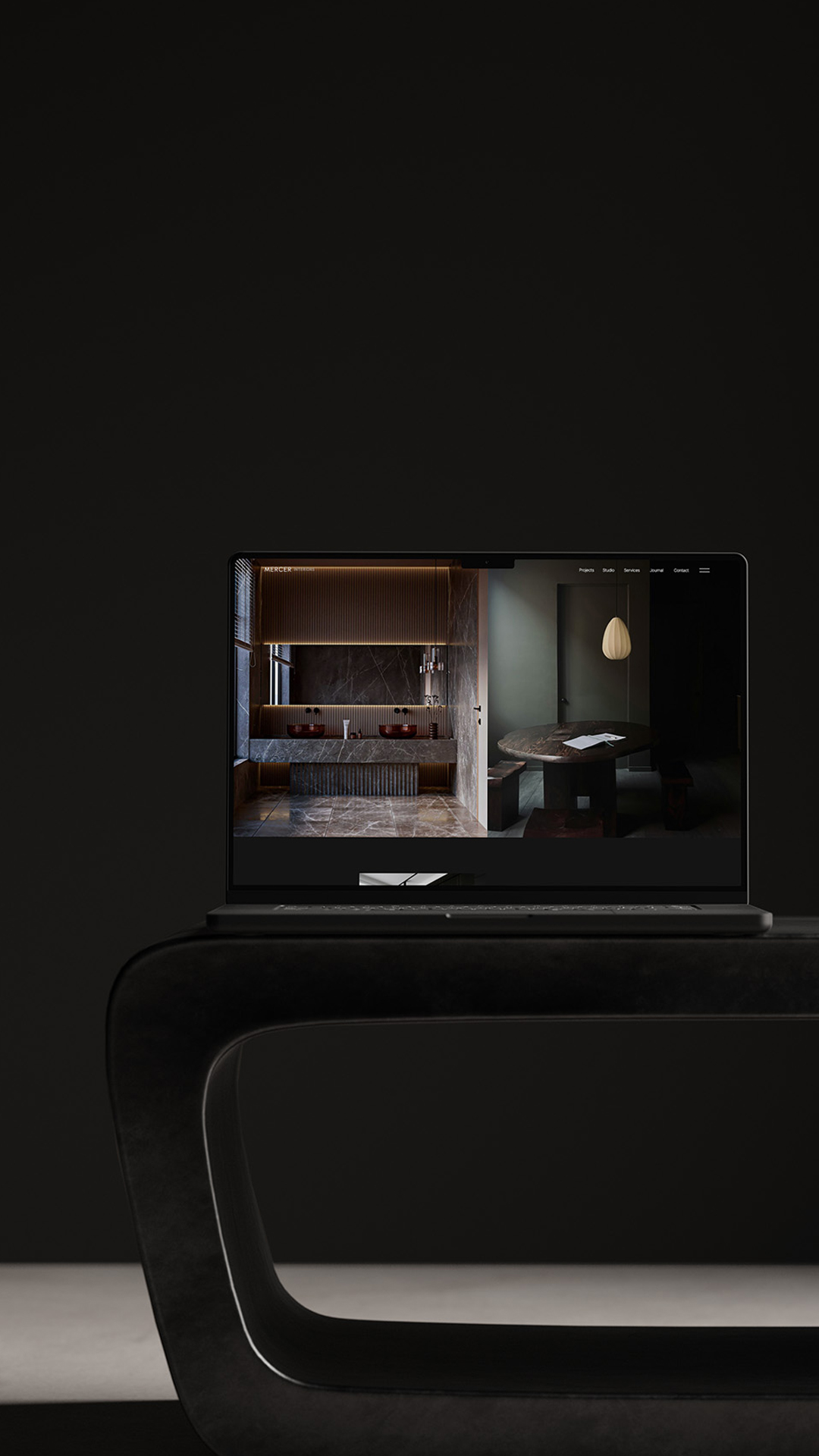
- Your website only needs five pages: Home, Portfolio, Services, About and Contact — each with one clear job.
- More pages don’t mean more professional; they usually just mean more places for a potential client to get lost.
- Curate like you would a shelf: fewer, better projects, and one obvious next step on every page.
When it comes to websites, more pages don’t mean more professional. It usually just means more places for a potential client to get lost. The best interior design websites are like the best interiors: everything has a purpose, and nothing is there just to fill space.
Here are the five pages that do the heavy lifting — and what actually belongs on each.
1. Home — the entrance hall
Within about five seconds, a visitor should know three things: what you do, who you do it for, and what to do next. That means a clear headline (not just “Welcome”), one or two hero images of your best work, and an obvious path to your portfolio or enquiry page.
Resist the urge to put everything on the homepage. It’s an entrance hall, not a storage unit.
2. Portfolio — the main event
This is why they came. Give your projects room to breathe: generous images, minimal text, no cramped grids of thumbnails fighting for attention. A handful of well-photographed, well-presented projects will always beat twenty mediocre ones. Curate your project images like you would a shelf — ruthlessly.
3. Services — the clarity page
Vague service pages create vague enquiries. Spell out what you offer (styling, partial renovations, full builds — whatever your range is), who each service suits, and what the process looks like. You have to make it easy for the right client to say “that’s me.”
Should you publish your prices on your website? We get this question a lot and we have the perfect solution to this debate – learn more about our Investment Pages.
4. About — the trust builder
Hiring an interior designer is personal. Clients are inviting you into their home, their budget and occasionally their marriage negotiations about the sofa. Your about page is where they decide whether they like you. A great photo, a warm story about how you work, and your design philosophy — that’s it. Written like a human, not a LinkedIn profile. The about page is without a doubt the hardest page to write (who wants to talk about themselves?!), that’s why we include a copywriting guide with every collection.
5. Contact — the easiest page to get wrong
You’d be amazed how many beautiful websites hide the contact page like it’s a secret. Make it one click from anywhere, keep the form short (name, email, a little about the project), and set expectations: “I reply within two business days” does wonders for nerves on both sides.
That’s it. Five pages.
A blog is a lovely bonus. A press page is nice if you have press. But these five are the foundation — get them right and your website starts working like the best member of your team: quietly converting the people who were already halfway to hiring you.
Every Maeten Collection includes all five pages, already structured and styled for interior designers — plus a copywriting guide that tells you exactly what to write on each page.
View All CollectionsThe 5 Pages Every Interior Design Website Needs