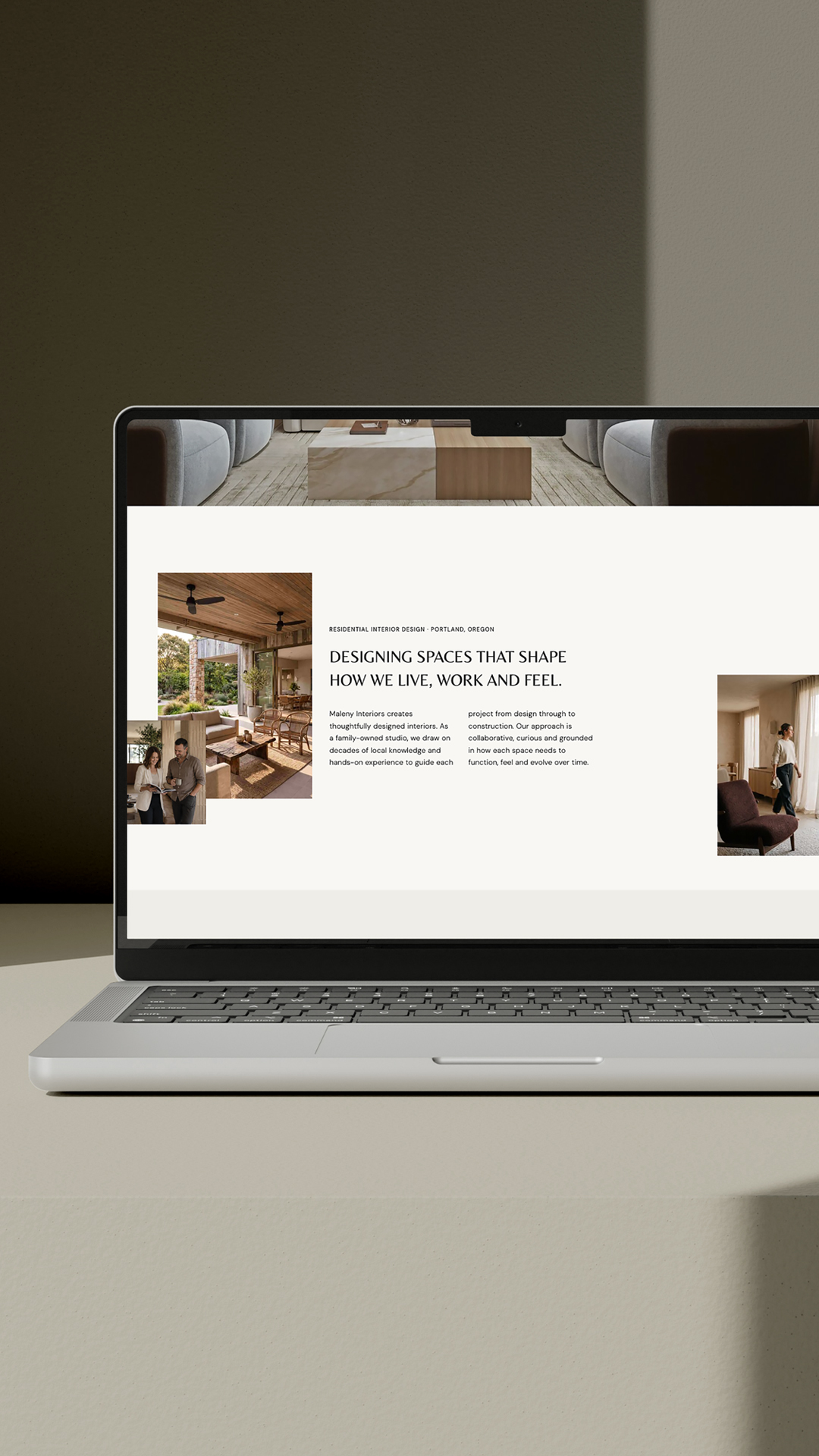
- Your headline should say what you do and who it’s for — clear beats clever, every time.
- The homepage formula: an intro about the client (not you), three plainly labelled services, one glorious project or quote, and a single call to action.
- Write like you talk, keep sentences short, and skip the buzzwords — “calm, liveable homes” says more than “bespoke curated solutions” ever will.
You can pull together a whole-home palette without breaking a sweat, but ask you to write a headline about yourself and suddenly the laundry needs doing, the dog needs walking, and the website copy stays a blank page for another six months.
You’re not alone. Writing about your own work is genuinely hard — you’re too close to it. So here’s your homepage, section by section, with exactly what to say.
The headline: say what you do, beautifully
Your headline is not the place for “Welcome to my website.” It’s the place to tell your ideal client, in one line, what you do and for whom. A simple formula that always works: what you create + who it’s for + the feeling.
For example: “Considered interiors for family homes on the coast.” Specific, calm, and instantly clear. Clever is optional. Clear is compulsory.
The intro paragraph: their problem, your promise
Two or three sentences, and here’s the secret — they’re about the client, not you. Name where they are now (“You’ve collected inspiration for years, but pulling it into one cohesive home feels impossible”) and promise where you’ll take them. Your credentials can wait for the about page.
The services teaser: three doors, clearly labelled
List your services in plain language — a title and one honest sentence each. “Interior styling: the finishing layer for a home that’s almost there.” No jargon, no mysterious package names that only make sense to you. Then link each one to the full services page.
The proof: one glorious project or one great quote
You don’t need a wall of logos or fifteen testimonials on the homepage. One beautiful project image with a single client quote underneath will do more than a carousel of everything you’ve ever done. Choose the quote that talks about how you made them feel, not just “she was great to work with.”
The call to action: one clear next step
End the page with a single instruction. “View the portfolio.” “Book a consultation.” Pick one. When you give people five options, they take none. When you give them one, they take it.
A few words on words
1. Write like you talk. Read it aloud — if you’d never say it to a client over coffee, cut it.
2. Short sentences. Interior designers understand negative space; it works in writing too.
3. Skip the buzzwords. “Bespoke curated luxury solutions” says nothing. “Calm, liveable homes for busy families” says everything.
Maeten Collection comes with a copy guide that walks you through what to write on every single page — prompts, best practices and examples included. The design is done, and the words are practically done too.
*** A note on using AI
AI can be a brilliant writing assistant — or it can hand you three paragraphs that sound like every other website on the internet. The difference is what you give it to work with.
Before you ask it to write anything, show it how you write. Paste in something you’ve already written — a long Instagram caption, an email to a client, an old about page — and ask it to match your voice. Without that, you’ll get generic. With it, you’ll get you, just faster.
A prompt that works: “I’m writing the about page for my interior design website. Here’s an example of my writing so you can match my voice: [paste it in]. Keep it warm and conversational — no buzzwords.”
And always read the result aloud before you publish. If it doesn’t pass the coffee-chat test from earlier, edit until it does.
View All CollectionsWhat to Write on Your Interior Design Homepage